School Literacy Evidence Report - Focus: Strengthening Authentic Literacy Experiences to Improve Fluency, Comprehension, and Belonging
Instructional Focus
Throughout the 2025/2026 school year, educators implemented intentional instructional practices to strengthen literacy outcomes through authentic, whole-text experiences. Literacy learning was be embedded across curricular areas, with a continued focus on belonging. Staff collaborated regularly to review assessment data and refine instructional practice through shared professional learning.
Assessment Overview (Fall → Spring 2025/2026)
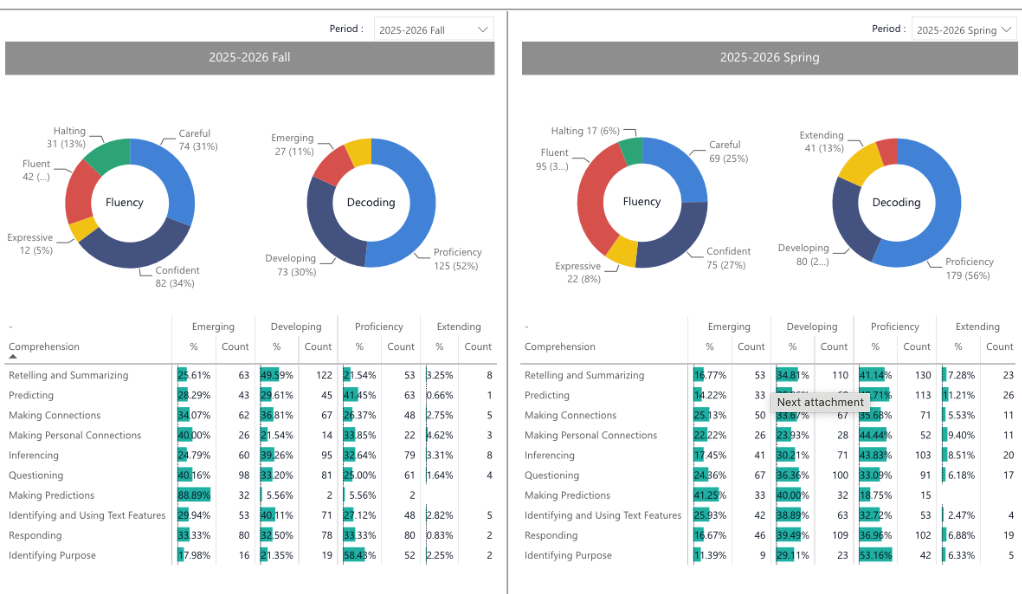
Decoding
-Proficiency increased from 125 students (52%) to 179 students (56%).
-Extending increased from 17 students (7%) to 41 students (13%).
-Developing increased from 73 students (30%) to 80 students (25%).
-Emerging decreased from 27 students (11%) to 17 students (5%).
Overall, decoding results indicate continued strengthening of foundational reading skills across grade levels. There was substantial growth in the number of students achieving Proficiency and Extending levels, as well as a notable decrease in the number of students at the Emerging level.
Fluency
-Fluent increased from 42 students (17%) to 95 students (34%).
-Expressive increased from 12 students (5%) to 22 students (8%).
-Halting decreased from 31 students (13%) to 17 students (6%).
-Confident decreased slightly from 82 students (34%) to 75 students (27%).
-Careful decreased from 74 students (31%) to 69 students (25%).
Overall, fluency data demonstrates positive growth, with a significant increase in the number of students reading at the Fluent and Expressive levels and a reduction in the number of students in the Halting category. These changes suggest that many students progressed from developing fluency levels into more advanced levels.
Belonging and Engagement Indicators (Student Survey Data)
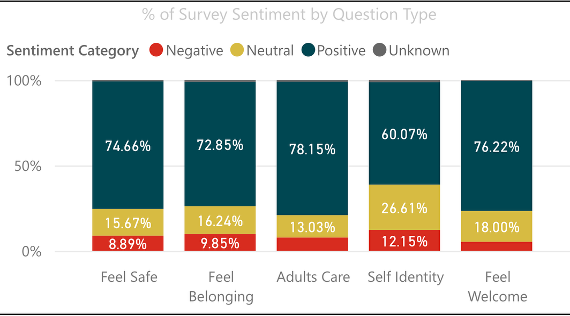
Student survey data indicates strong overall positive sentiment related to belonging and school connectedness:
-Adults Care: 78.15% positive
-Feel Welcome: 76.22% positive
-Feel Safe: 74.66% positive
-Feel Belonging: 72.85% positive
-Self Identity: 60.07% positive
These results indicate that many students feel safe, welcomed, and supported by adults in the school. The strongest area is relationships with adults (78.15%), while self-identity (60.07%) is lower, suggesting an area for continued focus.
Impact / Effectiveness
Assessment data indicates that targeted literacy instruction, explicit teaching, and repeated opportunities for practice are supporting growth in foundational literacy skills, particularly in decoding.
Fluency data demonstrates movement across categories, indicating increased engagement with reading tasks and more consistent participation in literacy experiences.
Student survey data reinforces that students report a strong sense of safety, belonging, and positive relationships with adults. However, the comparatively lower “self-identity” result suggests continued opportunity to strengthen identity-affirming practices through diverse texts, representation, and learning experiences that connect to their real life experiences.
Next Steps / Adjustments
While foundational literacy skills and belonging indicators are strong overall, next steps will focus on deepening comprehension and strengthening identity-affirming learning. Priority areas include:
-Strengthening authentic, whole-text literacy experiences across the school day
-Explicit modelling of comprehension, inferencing, and evidence-based responses
-Increasing representation and identity-affirming content in literacy learning
-Supporting students who remain in the Emerging range for comprehension-related thinking
Updated:
Tuesday, June 16, 2026