Literacy Collaboration-Reviewing Data and Forward Planning
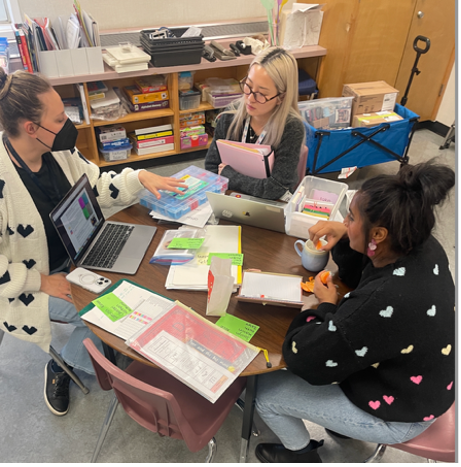
In November, after completing fall literacy assessments, staff met in grade group with resource teachers, district consultants and admin to share data points from the SPARK and RFRA formative assessment tools. Discussion focused on sharing findings and planning forward. Staff worked in teams to plan responsive and intentional next steps. See below for some of the instructional strategies that were shared and for some of the key take aways.
Planning Forward Using-SPARK Screener & Fall Reading Assessment
K/1 Literacy Takeaways/Discussion Highlights:
- Clarifying Early Reading Prompts: “Read the Picture” vs. “Read the Text”
Teachers developed shared clarity around appropriate instructional prompting:
- “Read the text” is preferred when decoding is the instructional focus (e.g., small groups, 1:1 conferences).
- “Read the picture” remains appropriate when students are reading for pleasure, engaging in meaning-making, or accessing texts above their current reading level.
2. Shifting From Moving Through Text Benchmarks to Phonics Skill Progressions
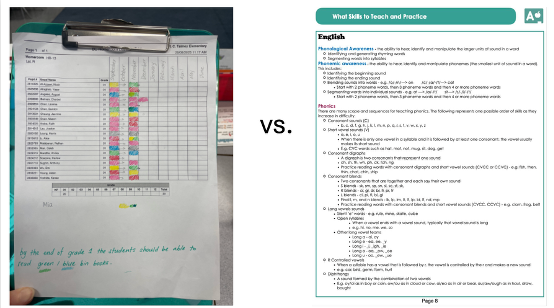
- A shift emerged for some staff toward prioritizing progression through discrete phonics skills rather than advancing through text levels.
- The Word Work progression in Learn38 (page 8) is now serving as an anchor for planning and goal setting.
3. Data-Driven Support for At-Risk Learners
SPARK data and classroom evidence helped identify students needing targeted intervention and necessary follow-up.
- An example is one student who is showing strong growth despite limited kindergarten experience after mini lessons on targeted skills.
- Another example was shared re two students who are now receiving daily 1:1 morning reading sessions, reflecting a commitment to timely, responsive intervention.
4. Strengthening Phonemic Awareness Through Daily Routines
Teachers explored instructional routines that support foundational skills.
- A five-minute daily word-building routine (e.g., changing mat → bat) reinforces phoneme manipulation and decoding readiness.
5. Embedding Word Work Before Guided Reading
Teams emphasized the importance of brief, targeted word-work warm-ups.
- Example: hiding images behind letters/words in a pocket chart and prompting students using initial sounds, segmenting, or other targeted phonological skills.
6. Reinforcing Responsive, Assessment-Driven Planning
Across discussions, and an area of continued focus is to emphasize the importance of using assessment data to guide instructional next steps and ensure students receive the right support at the right time.
Grade 4/5 Literacy Takeaways
1. Identified Instructional Need: Teaching Text Features Explicitly
Teachers recognized a clear need to strengthen instruction around nonfiction text features.
- This aligns with trends seen across intermediate grades and underscores the importance of systematic instruction in navigating expository texts.
Grade 6/7 Literacy Takeaways
1. Strengthening Nonfiction Comprehension Using RFRA Data
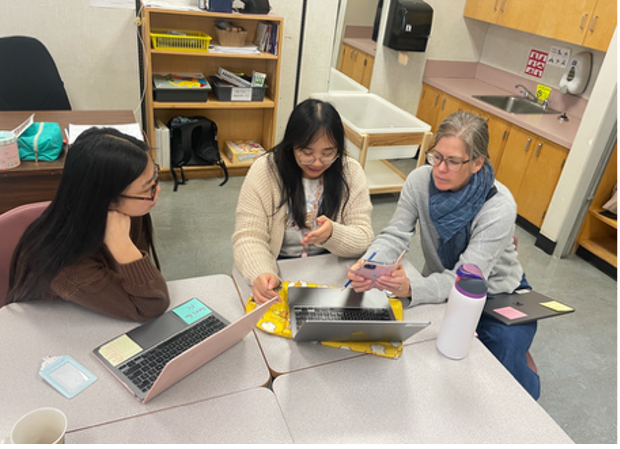
After reviewing RFRA assessment results, teachers in one class shifted to a stronger focus on nonfiction reading.
Instructional actions included:
- Distinguishing fiction vs. nonfiction
- Increasing access to nonfiction texts
- Explicit teaching of:
- previewing comprehension questions
- identifying and using text features, especially subheadings
Impact:
- Students now identify key details more efficiently, improving summarizing skills.
- Many students moved from DEV to PRF on recent assessments, indicating strong alignment between instruction and needs.
2. Evidence of Growth Following Explicit Instruction in Text Features
Reassessment showed substantial improvement in students’ purposeful use of nonfiction text features, confirming the value of continued explicit instruction.
3. Integrating Word Work in Upper Intermediate Classrooms
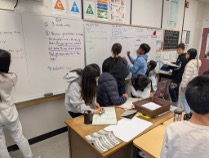
One teacher redesigned literacy routines using vertical whiteboards and word work as a starting point within a whole-class novel study.
- Early signs are positive: students are using novel vocabulary in their writing, demonstrating meaningful transfer.
- A future focus will be clarifying how fall assessment data is driving instructional decisions.



Updated:
Tuesday, December 2, 2025