Thinking Classrooms-Teacher and Student Learning
An action that we have taken to support our school’s learning focus is:
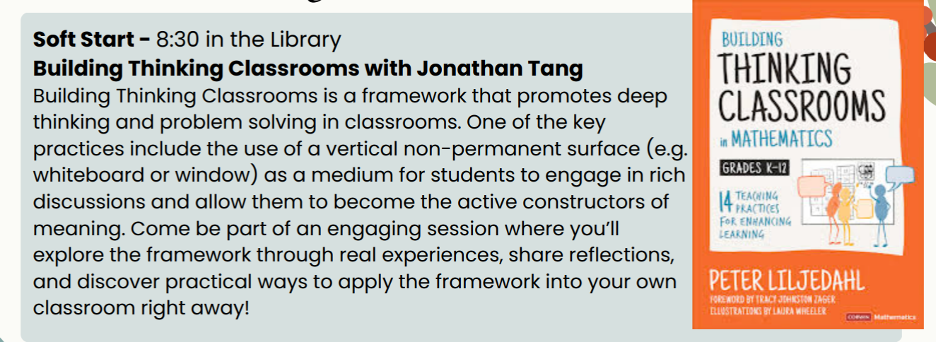
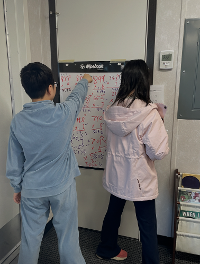
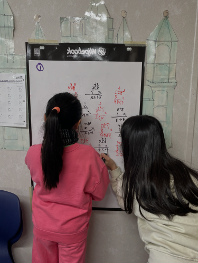
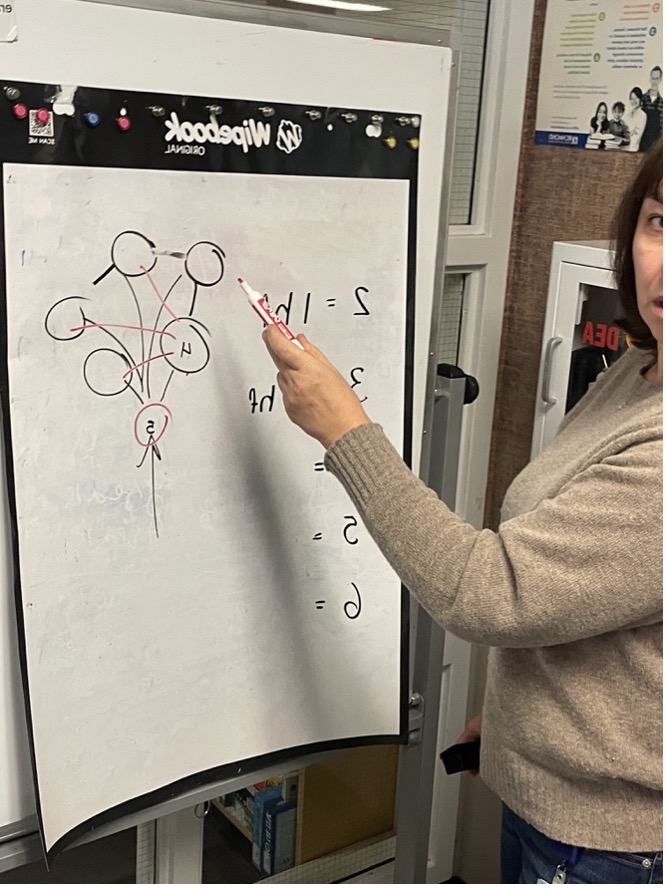
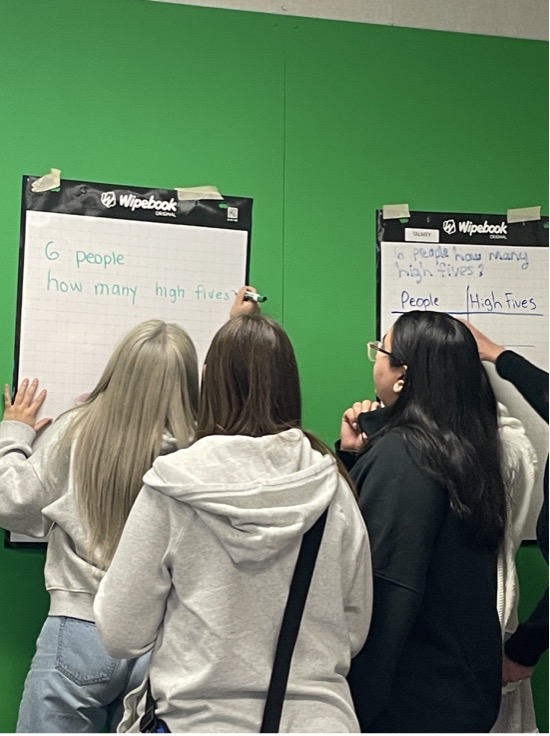
Engaging teachers in professional learning focused on the use of vertical whiteboards, facilitated by Jonathan Tang was a recent action that supported our school literacy focus. While the session was grounded in mathematics, it created rich opportunities for teachers to explore how students express, represent, and communicate their thinking.
This action supports our school’s learning focus in the following ways:
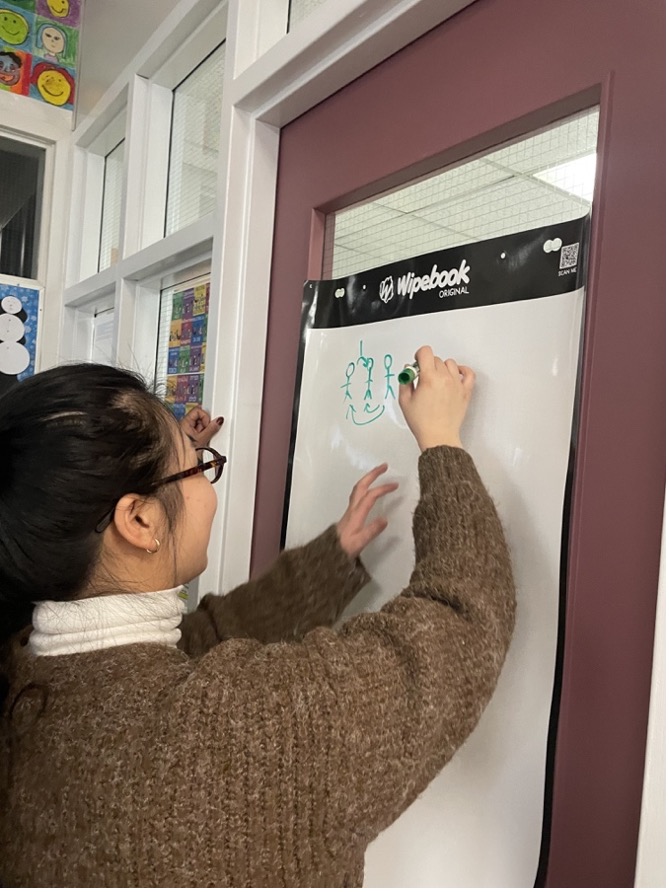
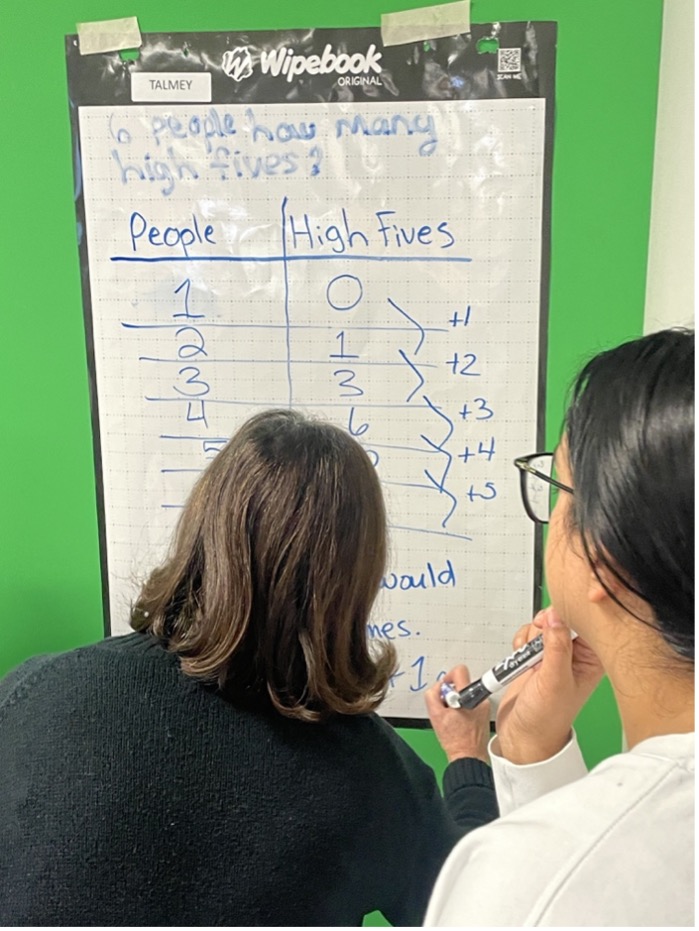
Although our school learning focus is literacy, this professional learning provided a powerful lens into how thinking becomes visible through multiple forms of expression. Teachers engaged in deep dialogue as they shared, questioned, and admired one another’s approaches, highlighting the importance of language, visual representation, and collaborative meaning-making.
Teachers noted how thinking made public supported clarity, confidence, and emotional safety:
- Seeing the sequence of thinking across year levels
- Using visuals to support understanding for different learners
- Recognizing that shared answers can be reassuring
- Valuing collective thinking over individual performance
The experience also prompted important conversations about minimizing student anxiety when introducing new learning structures.
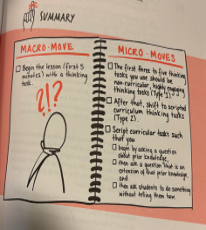
Teachers explored Peter Liljedahl’s Building Thinking Classrooms, which recommends beginning with non-curricular, highly engaging thinking tasks to build confidence and reduce stress. This reinforced our commitment to creating inclusive, supportive learning environments where all students feel safe to express their thinking.
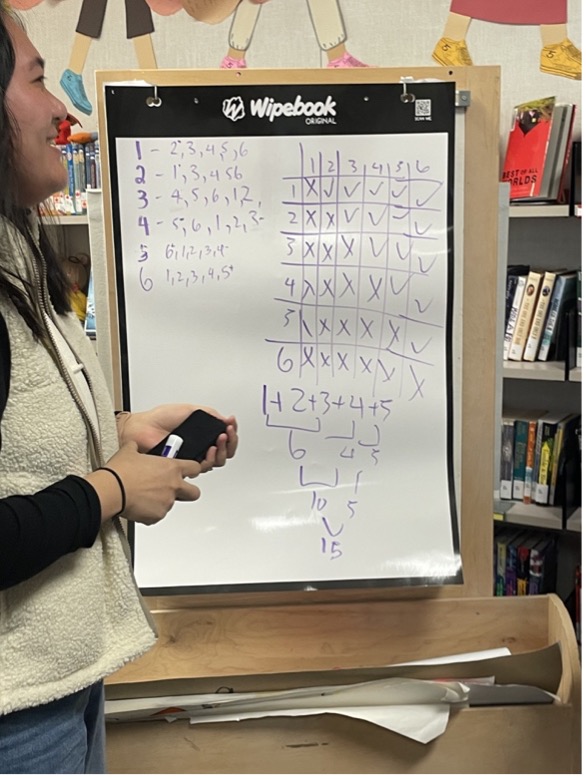
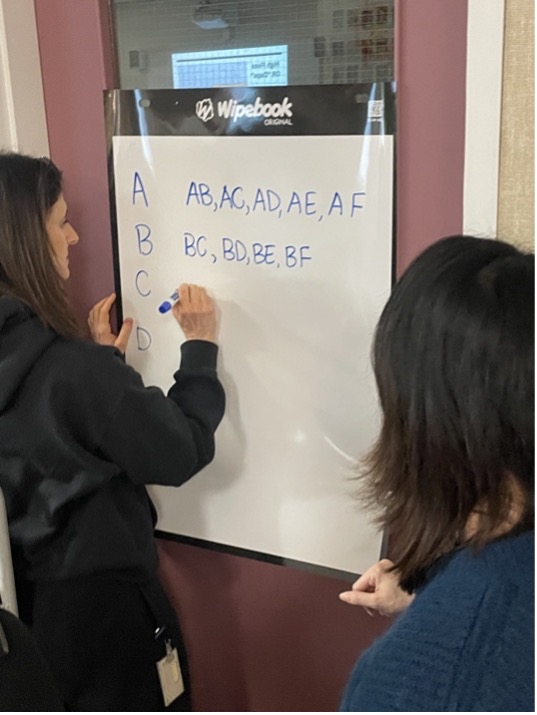
The evidence of thinking provided a powerful window into how we might assess our students’ ability to express themselves and their thinking We are always seeking evidence of student thinking, and our teachers were teaching themselves what that looks like.
“I like your thinking, I wouldn’t have thought to do it that way.”
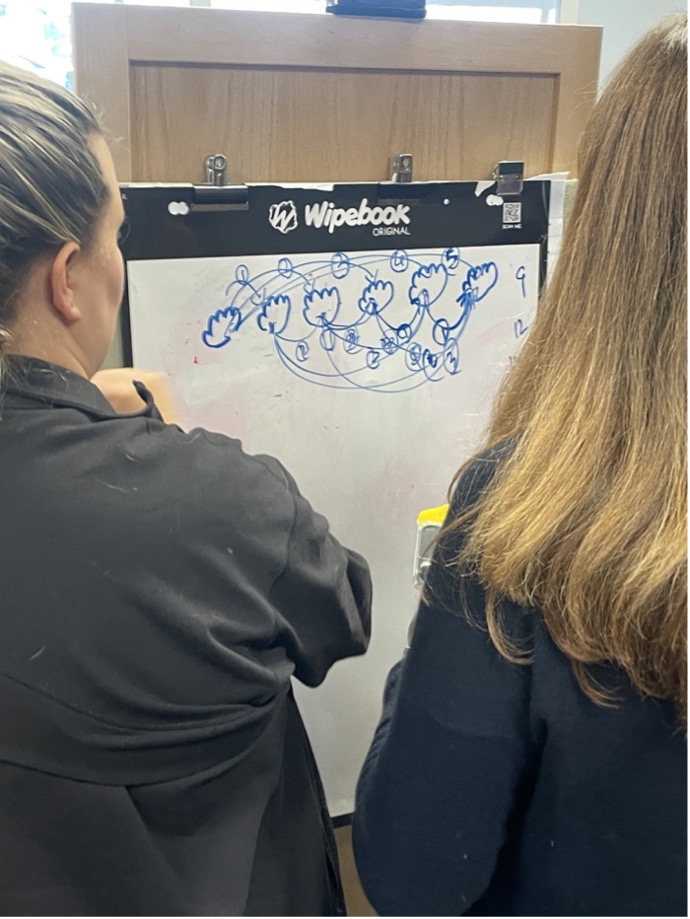
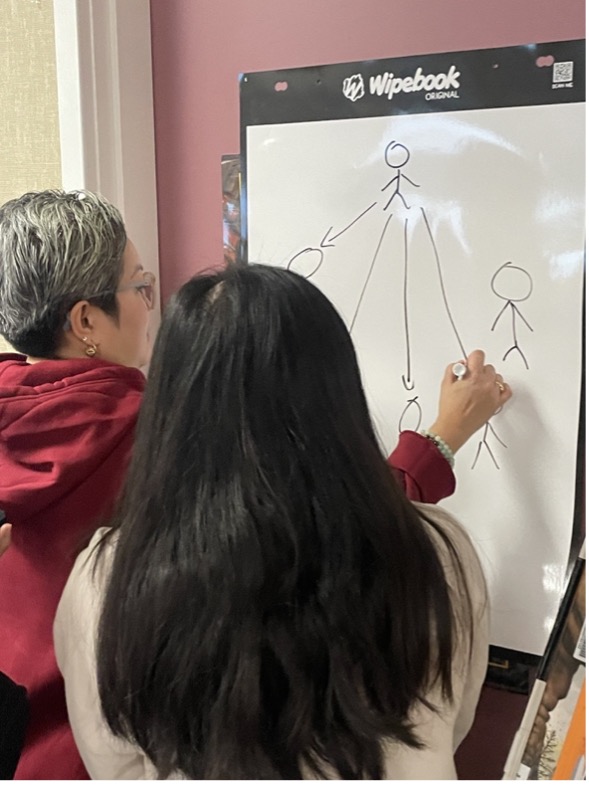
“Wait, wait, wait, I’m a visual thinker, I need to see the stick people giving each other high fives.”
“I’m admiring how they did that, I do like that approach.”
“It doesn’t matter who does more, who does less, it’s our thinking.”
“You can see the sequence of thinking from primary to intermediate.”
“Having just one person with the pen helped me understand the whole thing. I get it now!”
“As we looked around, we saw other groups had the same answers as us and that was reassuring to us. There is an emotional safety aspect to this way of learning.”
“When we are beginning things like this, we want to think about how to scaffold things, so the anxiety is minimized for our students.”
“I love what we are doing today. Everything is so useful. I’m totally using this.”
“This allows us to meet our students where they while recognizing we still having to push them”.
Teachers raising the question about how to minimize anxiety when introducing vertical whiteboards, particularly in Math, were directed to Peter Liljedahl’s Building Thinking Classrooms, where he recommends “the first three to five thinking tasks you use should be non-curricular, highly engaging thinking tasks” (p. 50)
Updated:
Wednesday, February 4, 2026